Today's Headline
Path To Paris – Environment California Says, Bonjour!

(posted by Paige Donner)
SAVE THE DATE!
Environment California’s 11th Annual Spring Event: Path to Paris
Saturday, May 16th, noon to 2:00 pm
at the lovely Brentwood home of actor Donna Mills
RSVP: EnvironmentCalifornia.org/SpringEvent
Please join Environment California for lunch, drinks and stimulating conversation to help elevate California’s global warming solutions leading up to the 2015 UN Climate Change Conference in Paris.
Special guest speaker: Sen. Fran Pavley, climate solutions leader and author of California’s game-changing Global Warming Solutions Act, AB 32
The Path To Paris
Global warming is the most critical issue of our time. With the U.N. Climate Change Conference to be held in Paris this December, there is a sense that if the world can unite around solving global warming, we can stave off the worst impacts.
In the lead-up to Paris, Gov. Brown and the leaders of the California legislature have outlined an aggressive path by which California can continue its leadership with these statewide goals:
- Increase the amount of electricity from renewable sources to 50 percent;
- Reduce the amount of petroleum used by our vehicles by 50 percent; and
- Increase the energy efficiency of existing buildings by 50 percent—all by 2030.
But the oil companies and the utilities are fighting every step of the way. Environment California is working this year to build the public support needed to pass legislation to turn these critical climate goals into reality — for our health and our future. Join us for a provocative conversation on how we can lead the way!
Sponsorship Opportunties
Ambassador to Paris $15,000 (Includes 10 event & 10 VIP reception tickets)
Partner $10,000 (Includes 8 event & 8 VIP reception tickets)
Friend $5,000 (Includes 6 event & 6 VIP reception tickets)
Supporter $2,500 (Includes 5 event & 5 VIP reception tickets)
Host $1,250 (Includes 5 event tickets)
Individual Ticket $200
| HOST COMMITTEE (in formation) Join the hosts of the 2015 Spring Event and other friends of Environment California. |
|
| Ed Asner Ed Begley, Jr. Barbara Bosson Peter Coyote Chayse Dacoda Glen Dake, Renee Dake Wilson & Brian Wilson Rosario Dawson Fran Diamond Frances Fisher David Freeman Catherine Geanuracos Anna Getty Tom Hayden & Barbara Williams Marshall Herskovitz Peter Horton Wendy James Katharine King Sharon Lawrence |
Rachelle Lefevre Mia Lehrer Debbie Levin Wendie Malick Wally Marks Sara Nichols Chris Paine Douglas H. Phelps John Quigley Akasha Richmond & Alan Schulman Jamie Rosenthal Wolf, David Wolf, Rick Rosenthal & Nancy Stephens & the The Rosenthal Family Foundation Kyra Sedgwick Amy Smart & Carter Oosterhouse Barbra Streisand Margery Tabankin & Earl Katz Tom & Janet Unterman Wendy Wendlandt & Cliff Latimer Roger & Nori Wolfson |
| Environment California is a nonprofit, nonpartisan 501(c)(4) environmental advocacy organization dedicated to protecting California’s air, water and open spaces. Contributions or gifts to Environment California, Inc. are not deductible as charitable contributions for federal income tax purposes. Donations may be used for political purposes such as supporting or opposing candidates. No funds will be earmarked or reserved for any political purpose. More information about Environment California, Inc. may be obtained by contacting the organization at: 3435 Wilshire Blvd., Suite 385, Los Angeles, CA 90010. | |
Local Governments For Sustainability World Congress
(posted from press release)
Climate-KIC will be present at the Local Governments for Sustainability (ICLEI) World Congress on 8 April in Seoul, Republic of Korea, to officially launch the Low Carbon City Lab programme and discuss new partnerships with cities and organisations from around the world.

Greenhouse gas emissions in cities originate from a host of different sources, such as electricity production, transportation, commercial and residential buildings, as well as industry and waste. Reducing urban emissions is a shared effort by a large panel of city stakeholders.
The new programme is part of a range of Climate-KIC programmes designed to help cities reduce greenhouse gas emissions and create new jobs for their low carbon economies. Climate-KIC is the European Union’s main climate innovation initiative and supported by the European Institute of Innovation and Technology (EIT).
Low Carbon City Lab
Cities account for 70 per cent of greenhouse gas emissions caused by human activities
PARIS, FRANCE, 31 March 2015 – With all eyes on a global deal to reduce greenhouse gasses at the UN’s COP21 conference in Paris later this year, EU initiative Climate-KIC will launch a new programme to help cities around the world unlock their emission reduction potential at a major global event in Seoul on 8 April 2015.
Cities account for 70 per cent of greenhouse gas emissions caused by human activities. According to the United Nations agency for human settlements and sustainable urban development, 75 per cent of the world population will be living in urban environments by 2050. The annual increase of the total world population is 1 per cent, while in the urban areas it is 1.8 per cent, almost twice as much. Cities will continue to be the key nexus for climate action for years to come.
Leveraging a diverse grouping of companies, research centers, technology experts, city networks and cities, Climate-KIC’s new Low Carbon City Lab programme will aim to unlock the greenhouse gas emission reduction potential of cities, and reduce global greenhouse gas emissions by 1 gigatonne per year.

Strategies to reduce urban greenhouse gas emissions
Thanh-Tam Lê, Director of Climate-KIC’s centre in France, said “Our Low Carbon City Lab is an exciting example of how public-private partnerships can tackle climate change through both a market-led and an impact driven approach.”
The programme provides a series of tools, consulting and services to develop urban climate mitigation strategies:
- 3D software to visualise greenhouse gas emissions in cities. We also help cities bring together the data from sources across their urban areas.
- Experts to verify greenhouse gas inventories according to the recently launched Greenhouse Gas Protocol standard and to prioritise actions.
- Help to boost cities’ business generation activities including support for start-ups
- Tools enabling the monitoring of emissions from the transport sector.
- Services including training and summer schools, with courses focusing on climate finance for cities and the latest developments in greenhouse gas monitoring approaches for cities.
- Contribution to the definition of climate finance frameworks for cities (NAMAs, VNAMAs)
Race For Water Reaches The Bermudas
The “Race for Water Odyssey” reaches the Bermudas and continues its scientific analyses

The Race for Water Odyssey (R4WO) arrived today in Bermuda, the second witness island of the expedition. The crew will stay on the British Archipelago for 6 days in order to collect scientific data, enabling an initial global assessment of ocean pollution caused by plastic waste.
After 7 days of turbulent navigation from the Azores due to the passing of a very lively weather front, the R4WO drew up, this Wednesday April 1st, in Hamilton. Present in Bermuda until April 5th, the expedition team will analyze the waste littering 6 strictly-selected beaches of the archipelago. In order to obtain comparable data, these analyses will be carried out according to the same scientific protocol as the one deployed in the Azores, working with local associations such as “Keep Bermuda Beautiful”. In addition, visits of the “MOD70 Race for Water” trimaran will be organized for the public. During this stopover, the R4WO benefits from the support of the Fairmont Hamilton Princess Hotel.
Next stop: New York
The R4WO will finish its crossing of the Atlantic by then setting off for New York, next stage in its world tour. In the megalopolis, several events will be organized to raise awareness and to draw the public’s attention to the problem of plastic waste in oceans. The R4WO will have the honour, amongst others, to talk about this crucial theme during a plenary session organized at the UN headquarters in collaboration with the UNEP.

About Race for Water Odyssey (R4WO)
Initiated by the Race for Water foundation, the “Race for Water Odyssey” is a unique expedition that aims to draw up the first global assessment of plastic pollution in the ocean by visiting island beaches situated in the 5 trash vortexes. In less than 300 days, over 40,000 nautical miles will be traveled, punctuated by 11 scientific stopovers and 9 outreach stopovers, involving a total of 13 countries. The Race for Water Odyssey benefits from the support of ISAF, Duke University, Oregon State University, senseFly, Swisscom and Swissnex.
Açai Harvest In Brazil
by Paige Donner

Each and every year in Brazil the population awaits its annual açai berry harvest with bated breath. It’s akin to the yearly Beaujolais harvest in France. A time of year filled with celebration and abundance.
The açai berry has been inching its way into the North American mainstream for at least a decade now. Hailed as a little berry packing a powerfully healthy punch, we first welcomed it in smoothies and nutrition bars.
Indeed some of the properties of the mythical açai berry are :
- Health tonic elixir
- Anti-oxidant
- Anti-inflammatory
- Sweet, Fruit and Fragrant


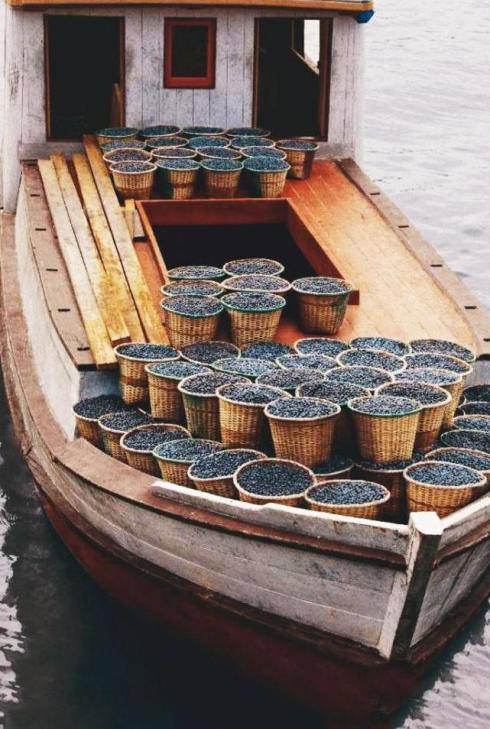
Health Properties Of The Açai Berry
For centuries this berry has been used for its health properties by the local Abaetetuba community in the northern Brazilian state of Pará.
The whole of Brazil has embraced the açai berry since many decades for more than its medicinal uses, however. Indeed the culture celebrates the annual harvest by making candies, sweets, and other delicacies out of the dark purple, pulpy and fruity berry.
Its deep purple color are indicative of the berry’s rich anti-oxidant properties. And if you’ve never tasted açai before, the flavor pyramid to expect is : red fruits such as raspberry and wild strawberry giving way to wood berries like blackberries and blueberries ending on a final note of sandal wood and light, aromatic woods.
Natura Brasil’s EKOS Açai Body Care Line
For its EKOS Açai line of body care products, Natura Brasil works with the Cofruta Community, a co-op based in the Pará state of Brazil, who does the bulk of the annual berry harvest.
COFRUTA = Fruit Growers Co-operative of Abaetetuba
This is the co-operative, who in their native Amazonian forest, produces and harvests 95% of the total Brazilian açai berry crop each year. The co-op is made up of several hundred families. The açai berries they harvest are certified organic and along with Natura Brasil, working with them for several decades now, they have developed a sustainable harvesting method. The co-op even produces their own açai berry syrups and jams now in a factory they built in their native Amazonian forest in 2002.
Products from Natura Brasil made from the açai berry harvest are released in limited edition quantities each year. They include :
Triphasée Shower Oil – this fruity and light oil goes on fresh all over your body on still moist, just showered skin. It contains oil pressed directly from the organic açai berry, thus containing concentrated amounts of pure anti-oxidant properties. A fresh, fruity, fragrant scent.
Frescor – the eau de toilette made from organic alcohol and essential oil extracts from the fresh açai berry harvest.
Hand Cream and Body Lotion – These products each give 24hours and 30 hours respectively of skin hydration as well as offering anti-inflammatory and anti-oxidant protection.
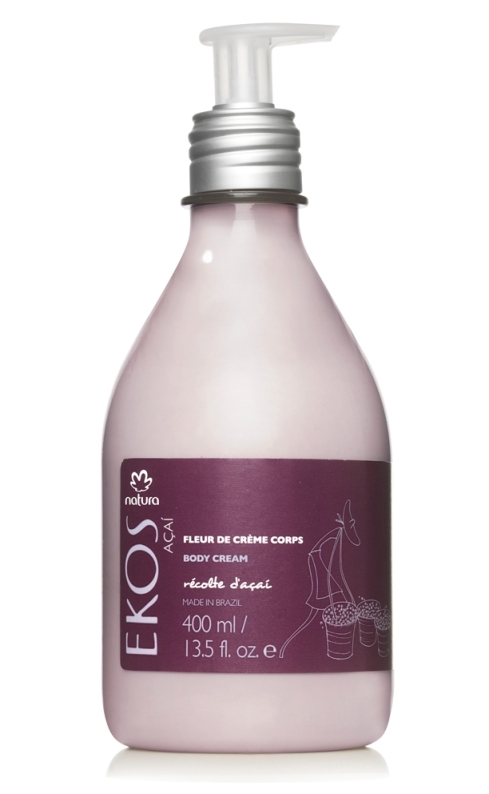
For more information about these products and the sustainable harvest program that Natura Brasil has institituted with the native Amazonian COFRUTA community in Brazil, go to NaturaBrasil.com.
Eco.Luxury.Style – quarterly Sustainable Magazine
The Emissary by Patricia Cori: Interpreting the Songs of the Whales to Save the Earth’s Oceans Indiana Jones-s tyle
Beau Bridges, Actor: "…A uniquely exciting adventure that capture the heart and the soul of the reader.”
The Emissary: Interpreting the Songs of the Whales to Save the Earth’s Oceans Indiana Jones-style
Elisabeth Rohm, actor, author, activist, mother: "The whales and dolphins of this planet need our help – and Patricia Cori is their Emissary!”
Los Angeles, CA, April 29, 2014 – Fans of Animal Planet would likely call bestselling author, Patricia Cori, the "whale whisperer.” However, Cori’s fans deem her a "real-life Indiana Jones.” One thing is for sure. Cori’s debut suspense book, The Emissary (North Atlantic Books) is action-packed and will soon be gracing the big screen in partnership with Global Universal Entertainment.
Since its release, The Emissary has garnered positive attention around the globe. Within the pages of The Emissary, Cori artfully engages her readers with fast action and profound, thought-provoking ideas. "Readers will definitely think about the Earth in a different light after reading The Emissary,” says Cori. "One of the key ideas explored is how our actions today impact the environment tomorrow. We’ve already seen some of this come to reality, however The Emissary explores this idea and the findings are quite unsettling.”

Three events take place nearly simultaneously: People in Los Angeles witness hundreds of birds dropping from the heavens; Beaches in Maine are covered with tens of thousands of dead fish; and a New Zealand beach resort is devastated with dying whales and dolphins. In the aftermath of this chaos, a strange, grid-like pattern forms in the clouds. Readers soon learn that this is not a coincidence, but part of an evil plan to destroy all life on Earth. Enter, the emissary – a leading psychic, who understands and identifies secrets in the songs of the dying whales. She then uses what she learns in her dangerous journey to avert a global disaster.
"The Emissary gives readers the thrills and action-packed adventures that we all thrive upon,” says Patricia Cori. "But it also offers something more, awareness of our oceans and the changes that have come about, due to man’s interference in nature.”
Meet Patricia Cori. Cori is a bestselling author, screenwriter, public speaker and has been interviewed on hundreds of radio and television programs including CNN and Coast to Coast. She’s credited with founding the global non-profit, Save Earth’s Oceans, Inc., whose mission is dedicated to restoring the balance of the ocean’s ecosystems. Cori’s the former host of Beyond the Matrix (BBS Radio) and she is deemed a visionary to her fan base.
The Emissary
Pen Densham, Oscar-nominated screenwriter, director, producer, author, artist: "I am a giant fan of creativity that takes us out of our daily thinking. Patricia Cori has penned just such a tale. A broad fantasy adventure that speaks to those who want to think differently and challenge the daily onslaught against nature and our own future.”
Ervin Laszlo, twice nominated for the Nobel prize, Founder and President of The Club of Budapest, Chancellor of the Giordano Bruno GlobalShift University, and best-selling author of 83 books and publications: "The Emissary is that rarest of books: it entertains, indeed, it fascinates, and at the same time conveys a message that we should not forget. Indeed, once we have opened this book, we never will.”
Jim Marrs, New York Times Best Selling author of Psi Spies: The True Story of America’s Psychic Warfare Program: "The Emissary’ brings us government skullduggery, sexy agents, catastrophic events, high-sea adventure, singing whales and a cosmic secret — what’s not to like in this fast-paced page turner?”
New Consciousness Review: "Patricia Cori has done a great service to us all, and I believe the majestic creatures of the sea as well, by turning her skill, passion, and intelligence toward understanding and protecting them, and simultaneously illuminating a path for human transformation.”
Lawrence Bloom, Recently retired Chairman of the UN Environmental Progamme, Green Economy Initiative Council on Green Cities and the World Economic Forum at Davos Global Agenda Council on Urban Management: "It’s a brilliant story – it reads with the pace of a Bond novel, and it’s based in reality. You may not sleep well after you read it! I could not put it down….
Donald Newsom, President, BBS Radio Network, Inc: "Phenomenal! Her extraordinary vision and the way she communicates her truth to her readers will make Patricia Cori a staple in every library.”
Eco.Luxury.Style – quarterly Sustainable Magazine
Green Blog Network * Greening Hollywood * Greening Beauty
Greening Paris * Greening Vancouver
Recycle, Reuse, Rejoice!

Une Way Of Life: Burnt Red Nails
By Paige Donner
We love (as in love ! love !) Une’s Slightly Burnt Red nail enamel. Red livens up any outfit and adapts to all clothes and makeup, regardless of coloring. Deep and almost brickishly red, it’s a perfect color for early spring and on into the summer. Did we mention how nicely it wears with a deep brown tan ?
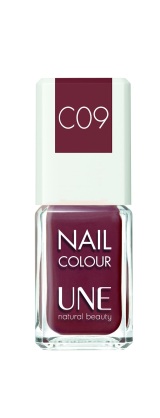
Something else you’ll find with UNE nail poishes is an XXL brush that applies your enamel varnish on your nail in one easy stroke. Its not-too-hard, not-too-soft brush fans out over the nail so you’ve got full color coverage precisely and in a flash of one brush-stroke.
And since it’s UNE, ethical is part of the product and part of the packaging. For instance, on the back of each nail polish bottle label is the figure that indicates the percentage of natural origin ingredients for each varnish shade : C09 our Slightly Burnt UNE Red lovely is a whopping 72.1% natural origin.
The Base and Top Coat otherwise known as C00 is 85% natural origin. This adds a natural Ultra-Shine to any of the nail enamel colors.
The color pigments ? They are mineral.
The petrochemical derivatives found in most nail varnishes ? UNE replaced them with equally effective natural origin ingredients : cotton, potato, manioc, algae.
New for this Spring are the 4 shades to match skin color, ranging from NUDE to cocoa brown. Forbidden and exciting shades to wear on your hands as we cruise towards warmer weather.
Other members of the UNE nail enamel color wheel are the SHIL family of shades. These are 2 Natural Shades (soft pink, light beige), 2 Shades Inspired by Lips (blush red, slightly burnt UNE red), and 4 Inspired by Eyes (taupe, khaki, smokey, denim).
SHIL stands for Skin, Hair, Iris and Lips. It’s a sort of (shhh ! secret) code invented by UNE to create natural colors that enhance women of all ages. These shades take their inspiration from the natural shades of Skin, Hair, Irises and Lips.
You can rely on your 3-in-1 UNE nail color formula – that’s Base, Color and Extreme Shine – to be formaldehyde-, phthalate- and toluene-free.
Oil-Based Nail Polish Remover
And now for the real kicker ! UNE likes to say that they don’t know the meaning of impossible. So when faced with creating a natural nail polish remover, they went in the direction of OIL-Based and all natural.
The First 100% natural origin, zero fragrance remover.
What’s more, it not just respects your nails but your cuticles too. Want to know what’s in it ?
80% natural origin solvents extracted from plants.
20% sweet almond and apricot oil
On the light, blossom green bottle you’ll find listed the ingredients, detailing the percentage of natural origin ingredients : 100%
It’s also 100% effective in removing the UNE nail natural ingredient nail polishes. Even my Spring-Summer fave, the Slightly Burnt UNE Red. If only for a color refresh !
Eco.Luxury.Style – quarterly Sustainable Magazine
Green Blog Network * Greening Hollywood * Greening Beauty
Greening Paris * Greening Vancouver
Recycle, Reuse, Rejoice!

Couvrance – For A Complexion Worthy of The Big Screen
by Paige Donner
Cake-free and doll perfect. That’s you, right ? Of course it is ! And if you feel you need just a tiny little nudge of help in getting there, look no further than Couvrance, the clean pure makeup by Avène, and its line of complexion correcters and foundations.
Couvrance is based on the premise that a woman’s skin is one of her most sensitive and prescious organs. Hence, tender loving care are the operating words here for this line of medical makeup.
The other philosophy is to use the correcter sticks that come in Coral, Yellow and Green to neutralize those small flaws, bags under the eyes and tiny blemishes. Once these small imperfections are made invisible through the delicate application of counter-balancing correcters, a light sheen of Couvrance Compact Foundation Creams can be applied to achieve that flawless Big Screen finish.
Since Valentine’s Day this year is yet again smack dab in the middle of Awards Season, here are some tips that will keep you looking your fresh, radiant and thoroughly seductive self, whatever the occasion :
Dark Circles Under The Eyes
First – and always – thoroughly moisturize under the eye before applying complexion correcters.
For brown undereye circles – Use the coral concealer stick which works for darker skin, the type of skin that tends toward brown undereye circles. The Couvrance Coral Concealer stick creates a very luminous and natural anti-dullness effect.
For blue undereye circles – The Couvrance Yellow Concealer stick works wonders in neutralising the appearance of blue undereye circles.
More Tips on the Concealer Sticks:
Green – neutralises redness, spots, small blemishesYellow – neutralises bruises and dark spots
Coral – neutralises brown spots, melasma
Technique « Since your small imperfections have now been neutralised, there’s no need to apply coat after coat of foundation. Instead focus on texture and application techniques, with the desired results in mind. »
Use a brush to apply the Couvrance Fluid Foundation Corrector. This will achieve the appearance of a flawless complexion by casting a veil over your skin. If your complexion tends towards the grey or dull (such as during winter months!), choose a shade with a hint of pink to freshen up your complexion. Choosing a shade that is slightly ligher than your skin tone can help your face appear younger. (Darker shades tend to add years.)
Now, for the finishing touches, you can actually « draw » on your face with the Couvrance Concealer Pen.
These work by applying them to your face after your foundation (to avoid running). The areas of application are on these points : the forehead, nasolabial folds, tip of the nose, corners of the mouth, hollow of the chin.
This adds contour and illumination to your face.
Last step – Mattify your makeup with a dusting of the Couvrance Mosaic Powders. *Hint – these can be used as an eye makeup palette as well.
Whether you set your makeup with the translucent Mosaic Powder, the Radiance or the Bronzer, each are sure to have your makeup lasting all night long and a quick re-dusting of the Mosaic Powder in its slim white compact case during the evening, or any time, will keep your face shine-free.
Nooowww you’re ready for your Big Screen close-up, you doll, you !
*Couvrance are high-tolerance formulas designed for sensitive skin types. They contain no preservatives, no fragrances and are hypoallergenic. They do not smear ; they offer UV protection and are resistant to water and perspiration.
Eco.Luxury.Style – quarterly Sustainable Magazine
Green Blog Network * Greening Hollywood * Greening Beauty
Greening Paris * Greening Vancouver
Recycle, Reuse, Rejoice!
-

- greening beauty couvrance by avene luminous
-

- greening beauty couvrance fondation peaux
-

- greening beauty couvrance bouts sticks
Une Way of Life – Skin Ideal Youth Serum Foundation
by Paige Donner
What do buddleiia davidii and thymus vulgaris have to do with your skin’s flawless finish ? Read on and I’ll tell you what…

Bourjois’ UNE line of cosmetics includes the newly released Skin Ideal Youth Serum Foundation, a youth-extending formula. Aptly named, this elixir is as much a foundation that gives your complexion a radiant clean flawless finish as it is a serum that incorporates these plants harvested from the Swiss Alps that help fight the dangerous effects of pollution with their anti-oxidising properties.
Cultivates the Natural Look and Reaps Youthfulness
How does Skin Ideal diminish signs of age as a mere foundation ?

« It’s a question of lightness, affinity with the skin, harmony with the complexion and respect for each woman’s natural look…
UNE’s Skin Ideal Youth Serum Foundation brings out the youthfulness of the face with very little make-up, resulting in a natural, ageless grace.
The dominant magic component in Skin Ideal is a product of green chemistry called Hyaluronic Acid. Do you love to see your skin « plumped up » looking dewy and hydrated ? The Hyaluronic Acid in Bourjois’ Skin Ideal is obtained by biosynthesis from lactic acid. It has a specific affinity with the skin, which it naturally and intensely hydrates, re-inflating and « plumping up » your complexion.
Light As A Feather
Skin Ideal is an EcoCert product, meaning that 98.2% of the total ingredients are of natural origin. So its featherweight qualities and ultralight emulsifiers are unique and offer a revolutionary glide and smoothness in a natural formula.
How ? UNE’s Skin Ideal uses a derivative of rice oil combined with arginine. The rice oil and arginine combination is a new generation of natural emulsifiers that give comfort to your skin and emollience to the Youth Serum Foundation. Your morning’s application, good for the whole day, glides on and blends into your skin in perfect homogeneity. It leaves a delicious sensation of feather like comfort and sensations of « nothing on the skin ».
To add to the magic effect of your flawlessly finished skin, UNE has included silica and mica combined in the form of powder micro-beads for an ultra-radiant soft focus effect. It’s an optical effect, but one that takes off a few years in an instant.
Skin Ideal is a youth enhancer, a friend to your complexion. It brings out natural light, freshness, radiance and, as a result, boosts your self-confidence. It is not a veil for your complexion nor is it a second skin. Its Organic Jojoba oil nourishes the skin without a greasy effect. Organic Argan Oil helps protect the skin’s youthfulness. Beeswax, the ultimate natural product, forms a protective film against external effects.
Makeup Tips from UNE :
« More is the enemy of good.
To look younger, it is necessary to lighten makeup and take particular care with the choice and apply foundation evenly without adding thickness.
Always choose the shade as close as possible to the natural skin tone : paler it looks dull, darker it ages.
Be sure to spread it evenly up to the base of the throat to avoid marking. »
More at UneBeauty.com/fr
Cosmetiques.ecocert.com
Recycle, Reuse, Rejoice!
Mascara: Green Is The New Pure Black
by Paige Donner
With awards season fully underway and the first of 2014’s runway shows revving up for the world’s hottest fashion weeks, a girl needs her go-to makeup product right at hand. Yes, mascara.
Of course ! Mascara .
According to Premium Beauty News, 54% of women say they couldn’t go without mascara. And counting all distribution channels combined, a whopping one billion little tubes of mascara are sold each year.
Still, one woman out of two claim to have sensitive eyes and who doesn’t want to pamper their peepers ?
So for all you awards show and fashion divas, and all the rest of us lovely creatures who prefer just to watch the parading down runways and red carpets from our perfectly made up eyes, Greening Beauty has scoured the makeup world to find our top picks for green glam when it comes to mascara.
They are Bourjois’s UNE Green Pride Volume Mascara and Avène’s High Tolerance Mascara in its Couvrance line of cosmetics.
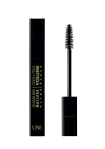
UNE is a lusciously lip-smacking green line of makeup, available in Europe (not yet in North America but can be found online) created by Bourjois, one of France’s most established makeup manufacturers. And now they’ve reinvented Black, for the Ultra Black Green Pride Volume Mascara.
Avène is a leading French cosmetics house that specializes in sensitive skin and is one of the pioneers of cosmeceuticals. Their full name is Laboratoires Dermatologiques Avène and for their newest mascara, High Tolerance Mascara, just released in November ’13, they have focused on a product that wears easily not just for women with sensitive eyes or contact lenses, but also for women who want their eyes to sparkle and shine from behind lush, long, black (or brown) lashes.
A few highlights of UNE’s organic and Ultra Black Mascara :
- Ecocert certified. Means 100% of total ingredients are from natural origin.
- Boosts lashes by 14x using a combination recipe of three natural waxes : shea butter, carnauba and beeswax. These sculpt, coat and maximize the sheen of the lashes.
- Holds for 16 hours thanks to the natural polymer, xantham gum.
- Absolute black for the Ultra Black pigment achieved by pure iron oxide.
- Brush is small and equipped with supple fibers and « reservoir spaces », a technology that evenly distributes the mascara to avoid clumping, applying the perfect amount in a single sweep.
- Easily removeable. No rubbing, just dab with spring water and the makeup dissolves gently, respecting sensitive eyes and keeping eyes young looking.
A few highlights of Avène’s High Tolerance Mascara
- Dedicated to dermatology since 1743, Avène has pioneered the concept of « sterile cosmetiques » or ultra pure cosmetics.
- The Ultra pure pigments for both their black and brown mascaras have a minimum of metal content.
- No Paraben. No Phenoxyethanol. No chlorophenesin. No fragrance.
- Acacia gum allows for full lashes with no clumping. Even after applying several layers. The sheathing and film producing of the natural polymer – acacia gum – mean each lash is coated for perfect definition.
- Ultra light micro beads in the silica powder increase volume while maintaining a natural effect.
- Volumising effect : +42% Lengthening effect : +39%
- High precision brush curved in the shape of an eyelid. Concave side works to make the lashes fuller and lusher. Convex side works to separate the lashes for better definition.
- Long-lasting : More than 8 hours. Guarantees no clumping while giving high-volume and curl.
- Easily removeable. Spray a bit of Avène Eau Thermale (natural and very pure French spring water) on your eyes and gently dab with cotton pad to remove.
And Voila’ ! You will not only have the mirrors to your soul shining like rock stars, but your eyes will be saying thank you the whole time to you, too.
http://cosmetiques.ecocert.com
http://www.pierre-fabre.com (Laboratoires Dermatologiques Avène)
Eco.Luxury.Style – quarterly Sustainable Magazine
Green Blog Network * Greening Hollywood * Greening Beauty
Greening Paris * Greening Vancouver
Recycle, Reuse, Rejoice!
-
- une
-
- une green pride mascara volume ultra black aed 94
-

- avene couvrance mascara colors
Easy Ways To Green Your Life
by Madoline Hatter (guest post)
Going green in your life doesn’t mean you have to make massive changes. Some of the greenest things you can do are the small ones. Making everyday changes to your life is easy to put into place one small step at a time. Here are some simple ways you can make your life greener and more eco-friendly:
1. Shop Seasonally and Locally – When you buy your food it is easy to pick the brands and products you are familiar with. However if you think about it many of these items must be shipped a long way to get to your grocery store’s shelves. Instead, why not pick up some locally grown or made foods. Not only are they usually cheaper because of a reduction in shipping costs but they are also better for you and for the environment. Buying locally grown or made food means fewer carbon emissions from transportation. It also supports the local economy. Not only that, but produce that is grown locally is also grown seasonally meaning it is better for you and tastes better too. Eating seasonally helps you to keep a variety in your diet and you can even try new foods that you may fall in love with. It is also cheaper to buy foods in season.
2. Go Back to the Basics of Cleaning – In the old days there were not a lot of cleaning products on the market. Basic items like vinegar, hydrogen peroxide, backing soda and pine oils were about your only selections. Today you can embrace the classics and clean green with these same items. Instead of polluting the environment and your home with noxious chemicals, stay clean and healthy and breathe easier by cleaning with natural products. Hydrogen peroxide is a great natural anti-bacterial agent and whitener. Baking soda works to scrub off tough stains and get into the cracks and crevices of your home. Vinegar helps to neutralize odors and get rid of tough stains. Pine oils and other essential oils like orange and lemon are great for cleaning and shining wood surfaces. Pine oil is also anti-bacterial!
3. Reduce Your Water Use –Cutting down on your water use does not mean you can only bathe once a week or never water your lawn. It is simple to cut down your water use and save yourself money as well as saving some strain on the environment. Cut off a minute of your shower time by turning off the water as you shampoo, condition and shave. Turn off the water as you brush your teeth. Do the dishes all at once. If by hand, wash the cups and utensils first and the pots and pans last. That way the water will stay cleaner longer and you can get it all done in one sink. If you use a dishwasher make sure it is completely full before you run it and run it on the fastest setting. In the yard you can water early in the morning or late at night to reduce evaporation. Run it low and slow to reduce run off as well.
4. Plant Local Flora – Speaking of saving water, planting local flora instead of grass is a great way to save water and time in maintaining your yard. Local flora is accustomed to the rainfall and temperature of your area. Not only does it require less maintenance but it is also more resistant to disease and predation by local fauna. You can even set up a wildlife area and attract birds, bees, and butterflies to your yard!
5. Natural Fertilizers – Instead of filling your yard with fake food, why not go the natural way? Not only is it better for your yard and the environment, but it is more affordable too. It only takes a small effort to set up your own compost pile and get to making some nutritious and delicious dirt for your plants. Everyday trash can go into the pile. Items like banana peels, orange peels, egg shells and other organic waste make for great compost. Cut down on the trash sent to landfills and get free dirt all in one step!
6. Recycle – As much as recycling has become a part of our lives there are still some of us who don’t do it as regularly as we should. Make it easy on yourself by setting aside special bins for different kinds of recyclables. Glass, plastic, paper and so on can all be recycled easily. Many garbage collectors often will take recycling as well. Or take it up to your local school or recycling center. Even items like Christmas trees can be recycled. If you drink a lot of canned beverages you can save those up and get money back at an aluminum recycling center. Don’t forget that old appliances can be recycled as well and sometimes you can get money back on those too. Old computers can often bring in some cash from their expensive parts as well.
7. Climate Control – One of the biggest expenses and biggest polluters in our homes are the climate controls. Heating and cooling costs are astronomical and the electricity they use is equally so. Cut down on your cooling costs during the summer by running fans, sealing cracks and covering windows. The sun shining in those windows can create more heat than you would think. Cracks can allow cool air to escape and hot air to take its place. Fans help to keep you cool more affordably than air conditioners by dispersing the heat around your body so that even a warm room feels cooler. In the winter, those cracks should still be filled. Cold air can blow in and warm air escape easily. Windows should be covered at night to avoid the chill factor and uncovered when it is sunny to capture that heat. Keep warmer by bundling up and using other heating elements, like leftover heat from cooking.
8. Cooking Green –Speaking of cooking, you need to be mindful of how you cook as well as what you cook. As I mentioned it is a good idea to cook using high heat during the winter. Using the oven and stove top to cook during the winter helps to heat the entire home and keep down the electric bill. However the same concept does not apply in the summer. Try to avoid using the oven and stove and instead opt for cooking in a slow cooker, outside on the grill, or even eating cold foods. A great way to cut down on pollution and cook your food in the summer is a traditional method in many countries.
Burying your food with hot coals to cook it low and slow is a great way to cook in the heat. Do not just cook a little bit either. Make a whole bunch of food and then save a portion of it for some other meals. That way you can just cook once and then heat it up quickly when you need it.
9. Drink More Water, But Less Bottled –Last but not least I’d like to talk about what we drink. Many of us drink a lot of sugary, artificial beverages that are not good for us or for the environment. Those plastic bottles add up as does the transportation and manufacturing costs. Instead, drink more water. Not the bottled kind but the filtered kind. A filter can give you the same great taste and quality of bottled water but without the high cost or environmental impact. Filtered water is better for you too than drinking
from plastics that can seep toxins into the water. Try using glass or proper containers for drinking water and make sure you don’t cause leeching by putting other beverages in those containers like lemon juices or tomato juices which can be very acidic. As you can see it is not very hard to make small changes in your everyday life and live greener.
It only takes a little bit of thought to change your habits and make a positive impact on the environment. Going green starts one small step at a time, so try out some of these ideas in your home today.
Author Byline:
This article is contributed by Madoline Hatter. Madoline is a freelance writer and blog junkie from ChangeOfAddressForm.com.
Eco.Luxury.Style – quarterly Sustainable Magazine
Green Blog Network * Greening Hollywood * Greening Beauty
Greening Paris * Greening Vancouver
Recycle, Reuse, Rejoice!
-

- green blog network pure green cleaning
-

- green blog network i heart water
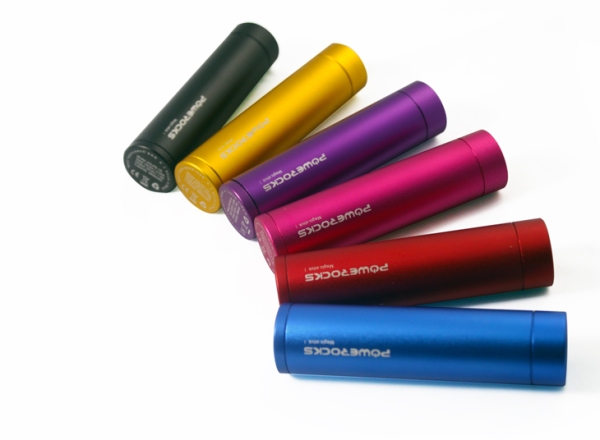
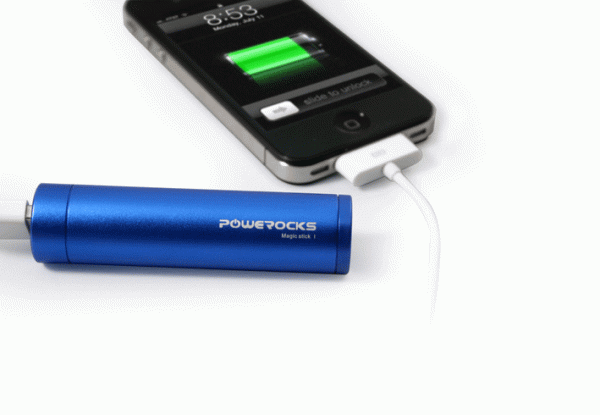
Powerocks Mini Portable Charging Devices
by Green Blog Network
In more tangible terms, more people have access to a portable phone today than to a toilet.
But when these little buddies – portable electronic devices – lose power, they’re about as useful as dead wood.
Now, however, you can throw your worry out the window. Because Powerocks has invented the genius PowerBank and Magic Cubes.
“The Attitude of Free Life” i.e. never be in an emergency or miss a call when away from home.
Above The Surface: Our Trash Satellites
By Liz Nelson/ Guest Blogger
Above the Surface: Our Trash Satellites

We live in a world where we purposely load tons of discarded trash into the planet’s crust as a method of getting rid of what we don’t want or have no method of reusing. As humans look for additional places on Earth to store various forms of waste, have you ever stopped to think about that which is orbiting our planet? According to NASA, there are over 21,000 pieces of trash that measure approximately four-inches in diameter floating above our heads at this very moment – which is only a small portion of the whole.
Although most of these pieces of trash are simply metal components from various remnants of space launches, they can pose as much of a treat to humankind as the trash here on Earth. One of the more disturbing facts is that the debris is estimated to triple in density by 2030. What does this mean for the future of humanity?
1. Telecommunications – A vast majority of our communications come from a satellite network in space. Although the density of orbiting trash isn’t enough to disrupt signals that are broadcast yet, these bits of trash pose a threat as projectiles that can damage sensitive equipment. If one of these satellites is damaged to the point of rendering it inoperable, we simply send another one to replace it – increasing the amount of debris yet again.
2. Astronaut Safety – If you figure in that there are roughly half a million pieces of debris that are floating around Earth in various sizes all traveling at 17,500 miles per hour, the threat to human life while in orbit is amazingly high. For example, the Winchester .223 Super Short Magnum bullet can travel at speeds surpassing 4000 feet per second. These bullets deliver a deadly amount of force from the sheer velocity alone. Now take into consideration that these pieces of debris in space are traveling at 25,700 feet per second. The force delivered on impact wouldn’t be anything short of devastating regardless of the size of the debris. An astronaut performing operations in space would have very little chance of survival if struck by one of these pieces.
3. Future Endeavors – With the amount of deadly metal trash circling our planet, future projects may be far more difficult to accomplish as time goes on. Every time we send a new satellite or shuttle into space, more debris is left behind in low orbit. As the shuttle needs to approach speeds of more than 17,000 miles per hour, it is already traveling at amazing speeds in order to achieve an orbital position. What if one of these four-inch diameter pieces of debris flies into the shuttle’s window as it is achieving those speeds? It may be like the shuttle hitting a solid surface at more than 25,000 miles per hour.
4. Earth Bound – Unlike the trash that is buried in landfills here on Earth, space debris can cause a great deal of immediate damage should it be pulled in by the planet’s gravitational pull. Various places around the globe have experienced close encounters of the trash kind. Sometimes, the debris that lands in the United States doesn’t even belong to the country. In March of 2011, a tank from a Russian Zenit-3 rocket made an impact crater in the hills of Colorado.
Yes, even American trash can make an unexpected re-entry. In 1997, a 580-pound US Delta II rocket fuel tank nearly impacted an occupied farmhouse. If it’s expected that the trash in orbit is to triple, the threat to life on the planet will triple as well. Without warning, one of these larger pieces of debris could re-enter the atmosphere and cause a great deal of damage on impact. Although the only report of space debris actually hitting someone only "brushed" her shoulder, an inch in the wrong direction could possibly have torn her arm out of its socket.
While it’s imperative that we monitor our waste materials here on the planet’s surface, we need to also pay attention to that which is over our heads. While much of the debris can burn up in the atmosphere, large pieces have no problem barreling towards the surface of Earth at incredible speeds. If we want to enjoy the technological nuances of today’s society, effort needs to be put into cleaning up our planet both on and off of its surface.
Author Bio:
This is a guest post by Liz Nelson from WhiteFence.com. She is a freelance writer and blogger from Houston.
Eco.Luxury.Style – quarterly Sustainable Magazine
Green Blog Network * Greening Hollywood * Greening Beauty
Greening Paris * Greening Vancouver
Recycle, Reuse, Rejoice!





 The Green Blog Network